
Mental health challenges are on the rise more than ever, which means people are looking for cutting edge mental health treatment to meet the demand. As technology advances, we continue to get more access to different mental health treatments beyond traditional medications such as antidepressants. TMS (Transcranial Magnetic Stimulation) and TES (Transcranial Electric Stimulation) are two such treatments that offer non-invasive (meaning no drugs and no breaking of the skin) means to achieve mental health.
The differences between these two modalities of brain stimulation is tricky to understand due to the complexity of the technology. In this article, we will break down some key concepts of TMS and TES, and compare both therapies to give you the knowledge you need to decide what is right for you!
What’s the Difference Between TMS and TES?
Transcranial Magnetic Stimulation (TMS) and Transcranial Electrical Stimulation (TES) both aim to change how neurons fire, but they work in very different ways.
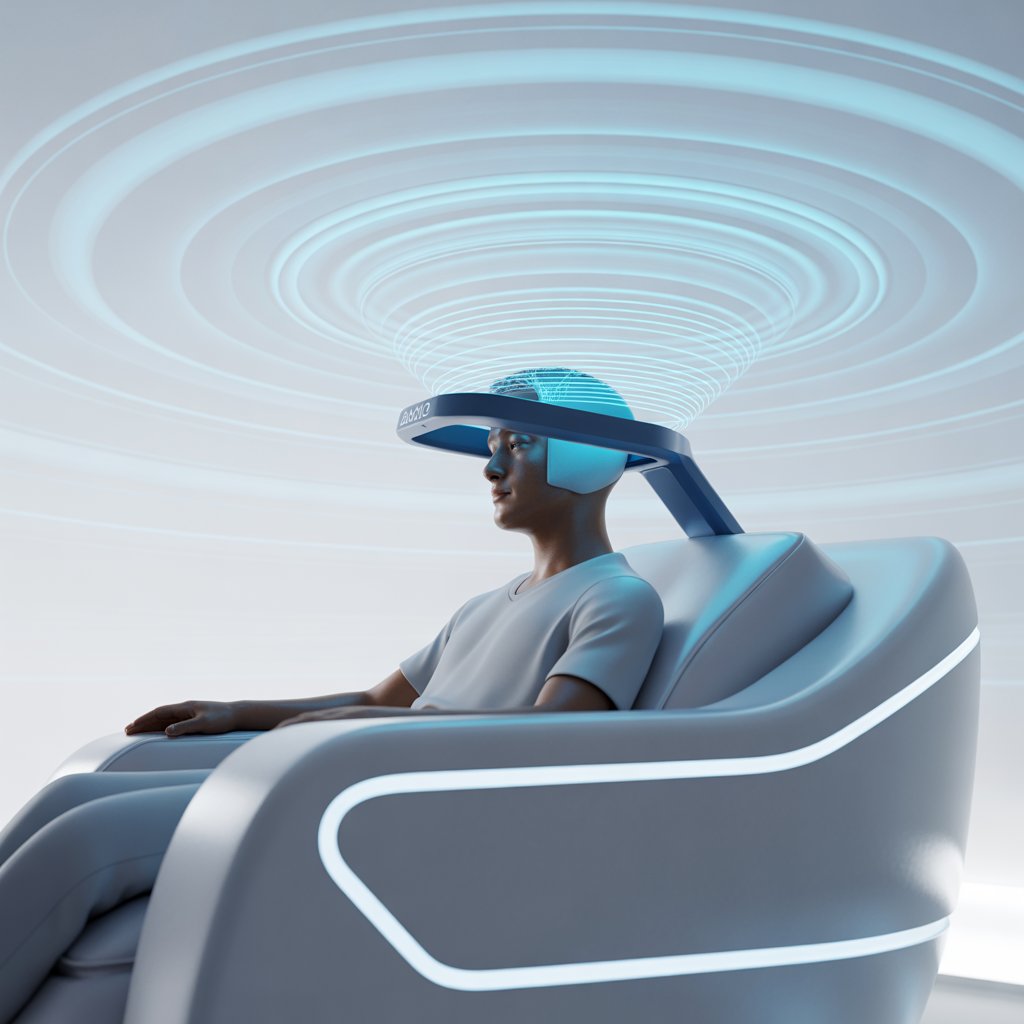
TMS uses a coil placed on the scalp to create quick, powerful magnetic pulses. These pulses pass through the skull and make tiny electric currents inside the brain. It’s like flicking a switch—neurons either fire or quiet down depending on the pulse speed. High-frequency TMS (many pulses per second) excites brain areas, while low-frequency TMS calms them. TMS has a very high safety profile, meaning it rarely causes side effects. A mild headache or scalp twitch is often the worst side effects that a patient may feel. Additionally, TMS is FDA-approved for depression, which gives TMS a distinct advantage over TES in terms of credibility.
TES, on the other hand, uses weak direct current (usually 1–2 mA) delivered through sponge electrodes soaked in salty water. The most common form is transcranial direct current stimulation (tDCS), a type of TES. One electrode is positively charged (anode) and one is negatively charged (cathode). The anode gently pushes neurons to fire more easily; the cathode makes them less likely to fire. TES is silent, painless, and feels like a faint tingle. It’s simpler and cheaper than TMS but affects larger brain areas with less precision.
In short: TMS = strong, focused magnetic pulses TES = gentle, widespread electric signals.
Which Disorders are Best Treated by TMS and Which are Best Treated with TES?
TMS shines when you need to target a specific brain spot deeply and strongly. It’s best for:
- Major depression – Especially when meds don’t work. High-frequency TMS over the left forehead (dorsolateral prefrontal cortex) is FDA-approved and according to some studies, can help up to 75% of treatment-resistant patients feel better.
- OCD & PTSD –FDA-cleared protocols exist for these too.
- Anxiety, ADHD, Autism, Stroke, Dementia, & more – Based on emerging evidence, we treat a plethora of other conditions here at American TMS Clinics. Check out our other blog on the top 5 conditions that TMS can help with.
TES (especially tDCS) is better for conditions that benefit from broad, gentle tuning of brain networks. It’s commonly studied for:
- Insomnia – tDCS over the forehead improves sleep quality by calming overactive wake centers.
- Stroke recovery and cognitive training – TES helps rebalance brain activity after injury.
TMS is the heavyweight for severe, focal problems. TES is the lightweight for milder, network-wide issues.
What Does the Research Say About the Efficacy of TMS vs. TES?
Direct comparisons of TMS and TES are far and few between, but two big research reviews give us a clearer picture of how TMS and TES stack up.
For Depression:
A 2023 study pooled 25 high-quality studies with over 1,000 patients2.
Both TMS and TES showed highly significant reduction of symptoms, with both being similarly effective. In real-world terms, both cut depression in half for many patients, with only slight differences in results, side effects, or dropouts2. However, the key difference between the two turned out to be accessibility. People with depression who have tried at least 1 antidepressant can get approved for insurance coverage. TES has no FDA-Approval, and is only occasionally covered by HSA, FSA, and ESA.
For Insomnia:
A 2021 review of 18 studies (with a total of 628 participants) showed TMS pulling ahead—especially where it counts1. Patients felt better with both, but TMS delivered real, measurable sleep gains:+37 minutes of total sleep
– +37 minutes of total sleep
– Higher sleep efficiency (less waking up)
– Deeper, more restorative rest (seen on brainwave tests)
TES helped people feel sleepier and rate their rest better, but it didn’t move the needle on actual sleep time or quality nearly as much. The more TMS sessions and pulses, the better results.
Bottom line:
TMS is the heavy hitter. It goes deeper, targets tighter, and produces objective, lasting brain changes you can measure overnight. TES is gentler and good for mood tuning, but when you need real power and precision, TMS stands taller. It’s the clinical-grade tool backed by stronger evidence for tough cases.
For Depression, TES and TMS are neck-and-neck, but TMS pulls out the win overall.
For Insomnia, TMS pulls ahead on real sleep gains, but TES still helps how patients feel.
For many other conditions such as PTSD, OCD, Anxiety, ADHD, Stroke, Autism, Dementia, and more, TMS is simply most flexible option.
TMS is more extensively researched, FDA-backed, and is often covered by insurance. — despite both being similarly effective for some disorders, these factors make TMS the best fit for the majority of people.
Still having trouble choosing between the two? Here are the key factors to help you decide:
Go With TMS if You are Looking for:
- Quick and long lasting results
- More tried and true methods (FDA-Approved)
- Doctor’s supervision and cooperation
- Insurance coverage
- Treatment of other disorders
Try out TES if You are Looking for:
- Similar efficacy to TMS in some conditions
- At home sessions
- Lowest impact side effects
References
- Huang, M., He, J., Li, D., & Tang, H. (2021). Effectiveness of TES and rTMS for the treatment of insomnia: Meta-analysis and meta-regression of randomized sham-controlled trials. Frontiers in Psychiatry, 12, Article 744475. https://doi.org/10.3389/fpsyt.2021.744475
- Li, X., Wang, Y., Zhang, J., & Zhang, Y. (2023). Comparing different non-invasive brain stimulation interventions for bipolar depression treatment: A network meta-analysis of randomized controlled trials. Neuroscience & Biobehavioral Reviews, 154, Article 105483. https://doi.org/10.1016/j.neubiorev.2023.105483