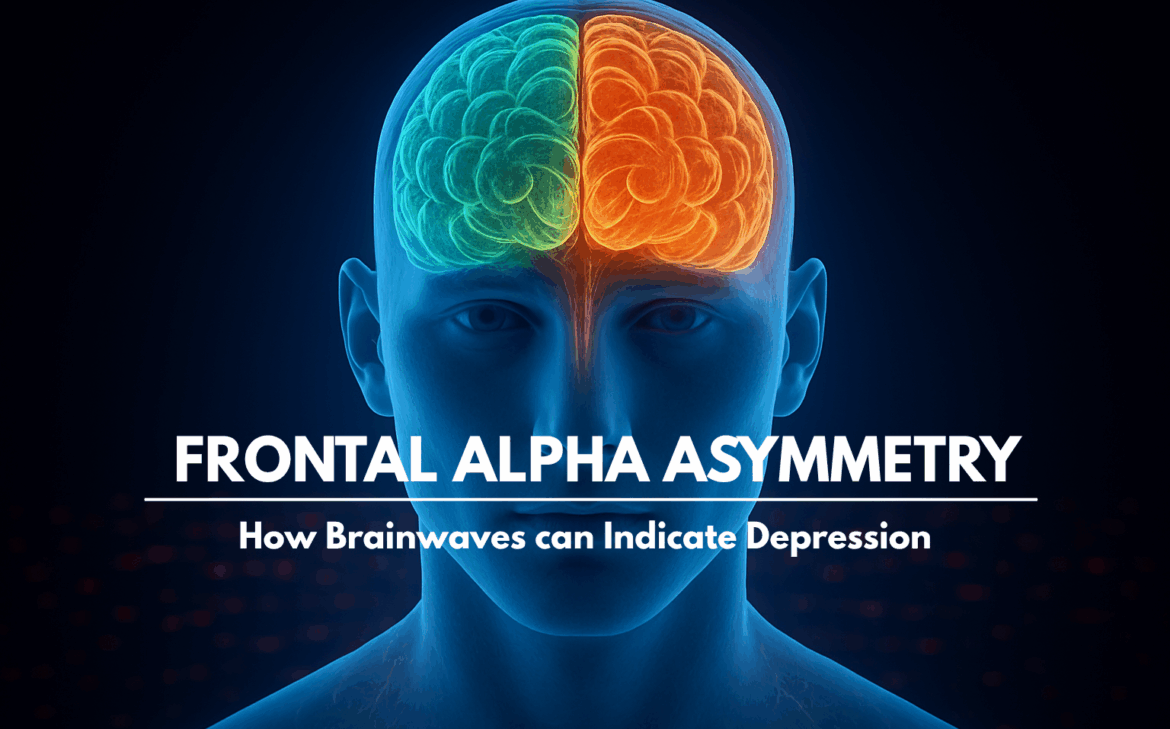
In the age of technological advancement, we have more neurodiagnostic tools than ever to get a better picture of many different mental health disorders. Electroencephalography (EEG) Technology has revealed a striking similarity between the vast majority of people struggling with depression. EEG shows that people with depression have been linked with an imbalance of brain wave frequencies called “Frontal Alpha Asymmetry.”
Most people have heard of chemical imbalances, which are a hotly debated topic in the world of psychiatry. However, in the case of Frontal Alpha Asymmetry, it is an electrical imbalance. Different sides of the brain produce different frequencies of electromagnetic fields, leading to different brain regions being out-of-sync.
In this article, we will explore what Frontal Alpha Asymmetry is, the sort of symptoms that come as part and parcel of it, and how TMS can help re-balance this asymmetry!
What is Alpha Asymmetry?
“Frontal Alpha Asymmetry” (FAA) is an imbalance of brainwaves in the frontal hemispheres of the brain. In order to understand it simply, let’s break it down word-by-word.
- We use the word “frontal” because it primarily arises in the F3 & F4 regions, which are approximately at the top right and top left corners of the hairline.
- It is termed “alpha” because the brainwaves in question are within the frequency ranges of 8-12Hz (8-12 oscillations per second).
- Lastly, we call it an “asymmetry” because there are more alpha waves in the left frontal region (F3) than the right (F4).
So, put simply, Frontal Alpha Asymmetry is when someone has an imbalance of alpha brainwaves in the frontal region of their brain.
But how do we know if we have this imbalance of brain waves in our frontal lobe? That’s where Electroencephalography (EEG) comes into play. An EEG is a diagnostic tool that measures the brainwaves that your brain is producing by placing electrodes around the scalp. Using this, we can measure how much alpha waves are being produced by the left frontal region (F3) and the right frontal region (F4). Then, we simply compare the difference between the alpha waves of these two regions.
What Sort of Symptoms Does Alpha Asymmetry Cause?
Now that we know what FAA is, we can begin to answer some questions about why it is linked to depression. It is important to note that researchers are still investigating the link between FAA and depression to determine the root cause. Nonetheless, countless studies have shown that the link exists, however small or large the link may truly be1.
That being said, there is no shortage of theories articulating the potential mechanism by which FAA and Depression are linked. The leading theory can be simplified as something along the lines of the following.
- Alpha waves are typically higher in the F3 region in those with depression2.
- Traditionally, high alpha waves in the F3 region indicates lower brain activity2.
- Therefore those with depression have a left frontal region (F3) that is constantly in a state of lower brain activity, causing lack of focus and tiredness2.
- Additionally, with a lack of activation in the left frontal region (F3), the right frontal region (F4) is forced to overcompensate. This often causes negative emotion, anxiety, and lack of motivation.
How Can TMS Therapy Balance Alpha Asymmetry?
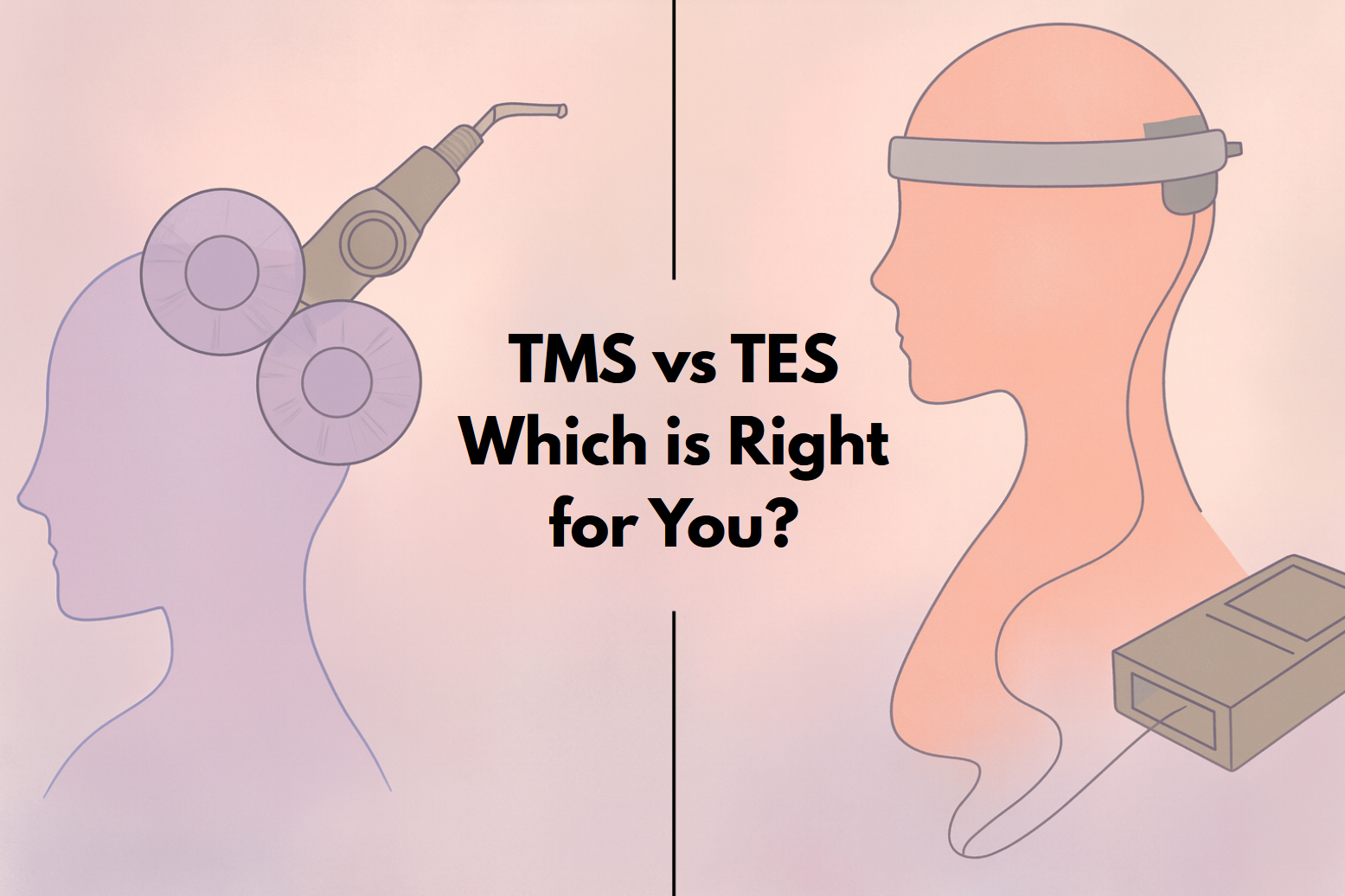
Understanding this theory about FAA is essential to understanding how TMS has such high rates of success in those struggling with depression. In short, TMS works by sending electromagnetic pulses into targeted regions of the brain to stimulate brain cells, called neurons. Therefore, as you might have already guessed, we can use TMS to send pulses to the F3 region to activate it and bring it out of the low activity alpha state, the hallmark of FAA. In fact, F3 stimulation is the FDA approved TMS protocol for depression. This works by bringing the left frontal region into balance with the right frontal region. The effects of this therapy are twofold:
- Increased activation of the F3 region, remediating lack of focus and tiredness.
- Less overcompensation of the F4 region, ameliorating anxiety, negative emotion, and lack of motivation.
If you want to understand how TMS works in more depth, check out our blog “How TMS Works: The Magic of Magnets.”
In Summary…
Frontal Alpha Asymmetry (FAA) is an imbalance of brainwaves in the frontal region of the brain, and is linked with depression. Understanding this link can give us insight into how TMS is so effective for those who are struggling with depression. When measured with an Electroencephalogram (EEG), we can figure out if FAA is the cause of one’s depression.
TMS is so therapeutic in treating depression because in theory, it helps “wake up” the inactive left frontal region (F3) to bring it into balance with its right-side counterpart (F4). If you or a loved one is struggling with depression, we urge you to come into our Scottsdale clinic here at American TMS Clinics. Here you can meet with our Psychiatrist, get an EEG assessment to measure your brainwaves, and receive TMS therapy to bring your brain back into balance!
References:
- Van der Vinne, N., Vollebregt, M. A., van Putten, M. J. A. M., & Arns, M. (2017). Frontal alpha asymmetry as a diagnostic marker in depression: Fact or fiction? A meta-analysis. NeuroImage: Clinical, 16, 79–87. https://doi.org/10.1016/j.nicl.2017.07.006
- Fitzgerald, P. J. (2024). Frontal Alpha Asymmetry and Its Modulation by Monoaminergic Neurotransmitters in Depression. Clinical Psychopharmacology and Neuroscience. https://doi.org/10.9758/cpn.23.1138